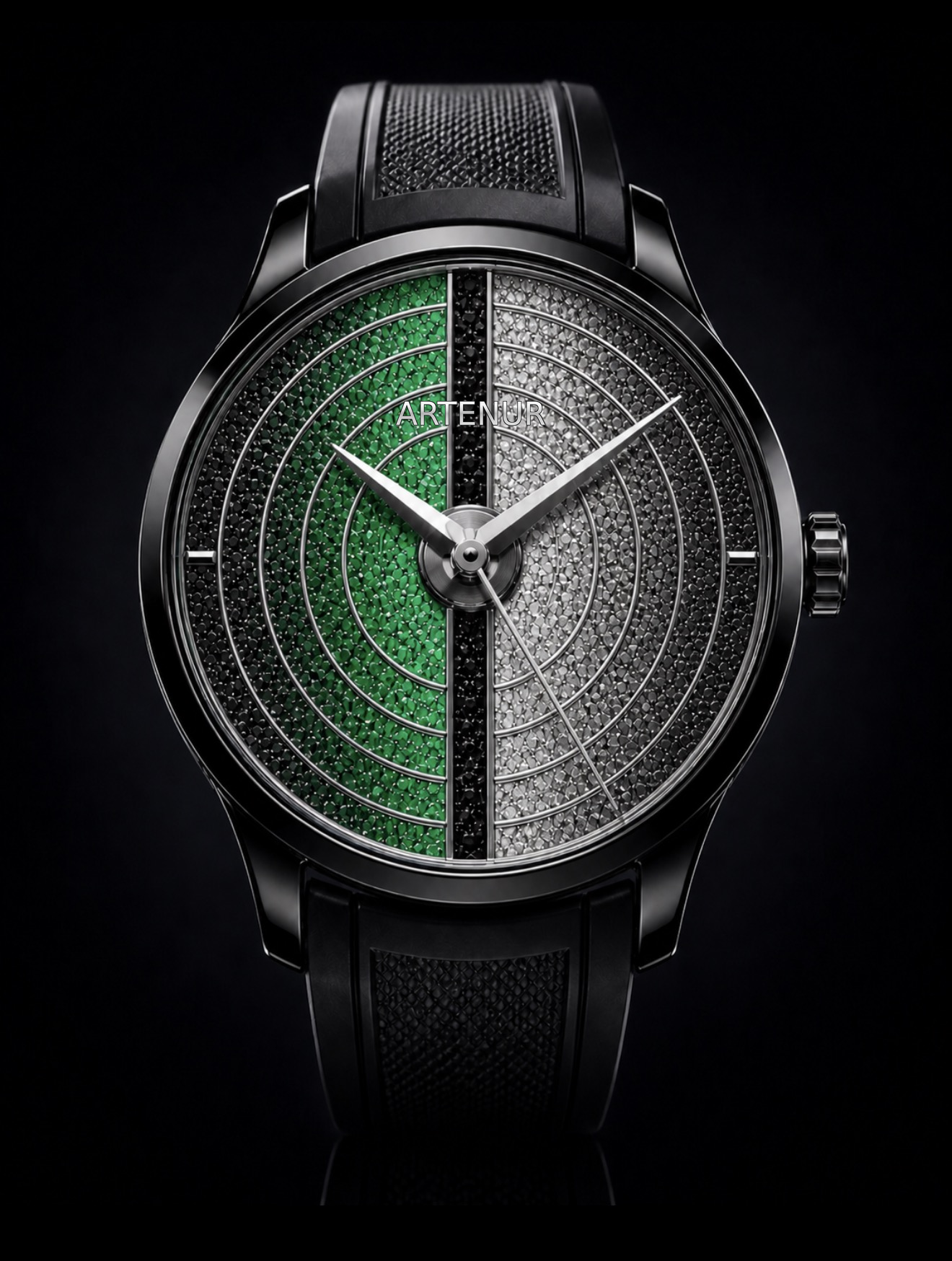
Concept rendering
نورNurAN-01Enter
Cairo
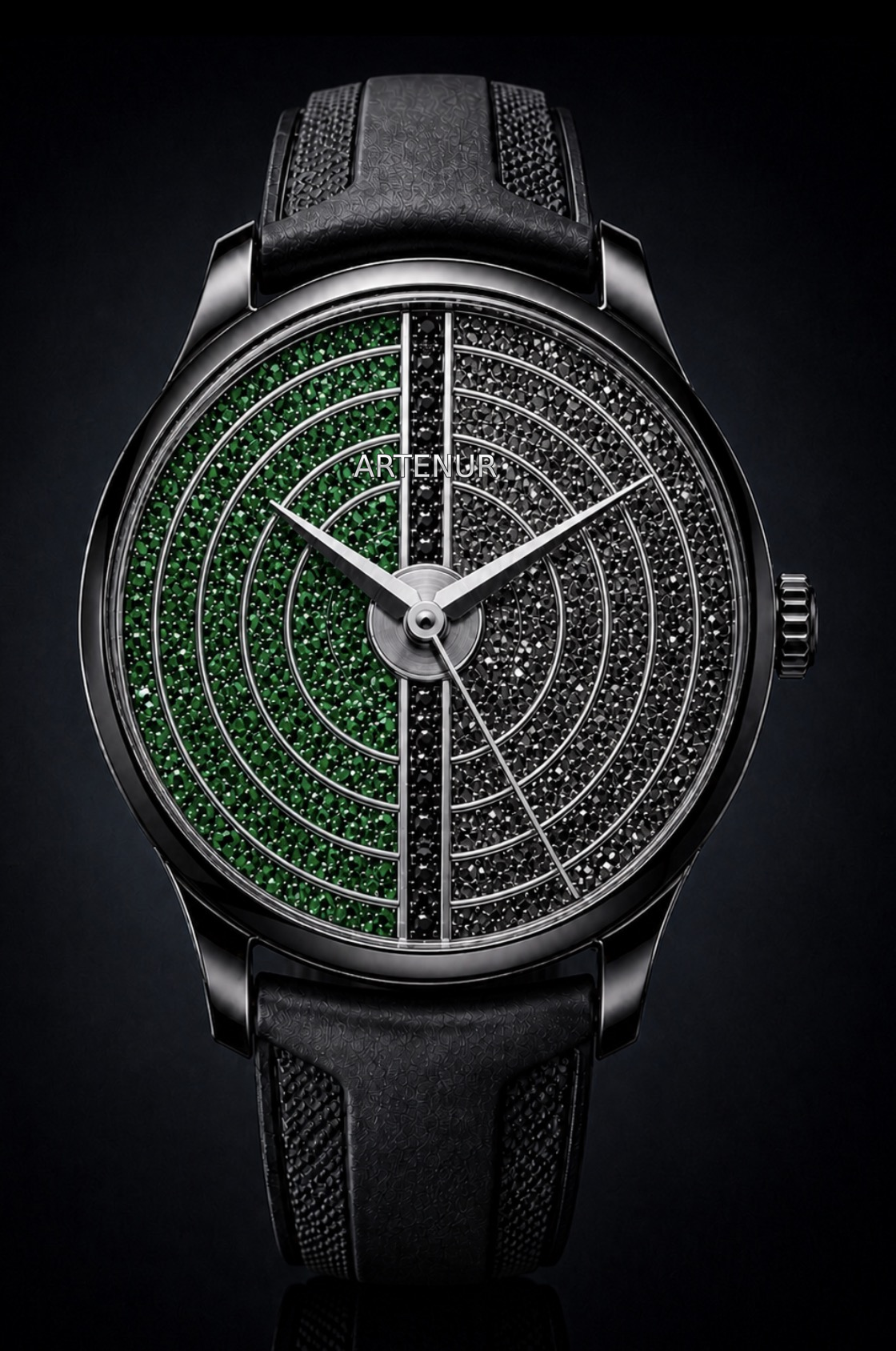
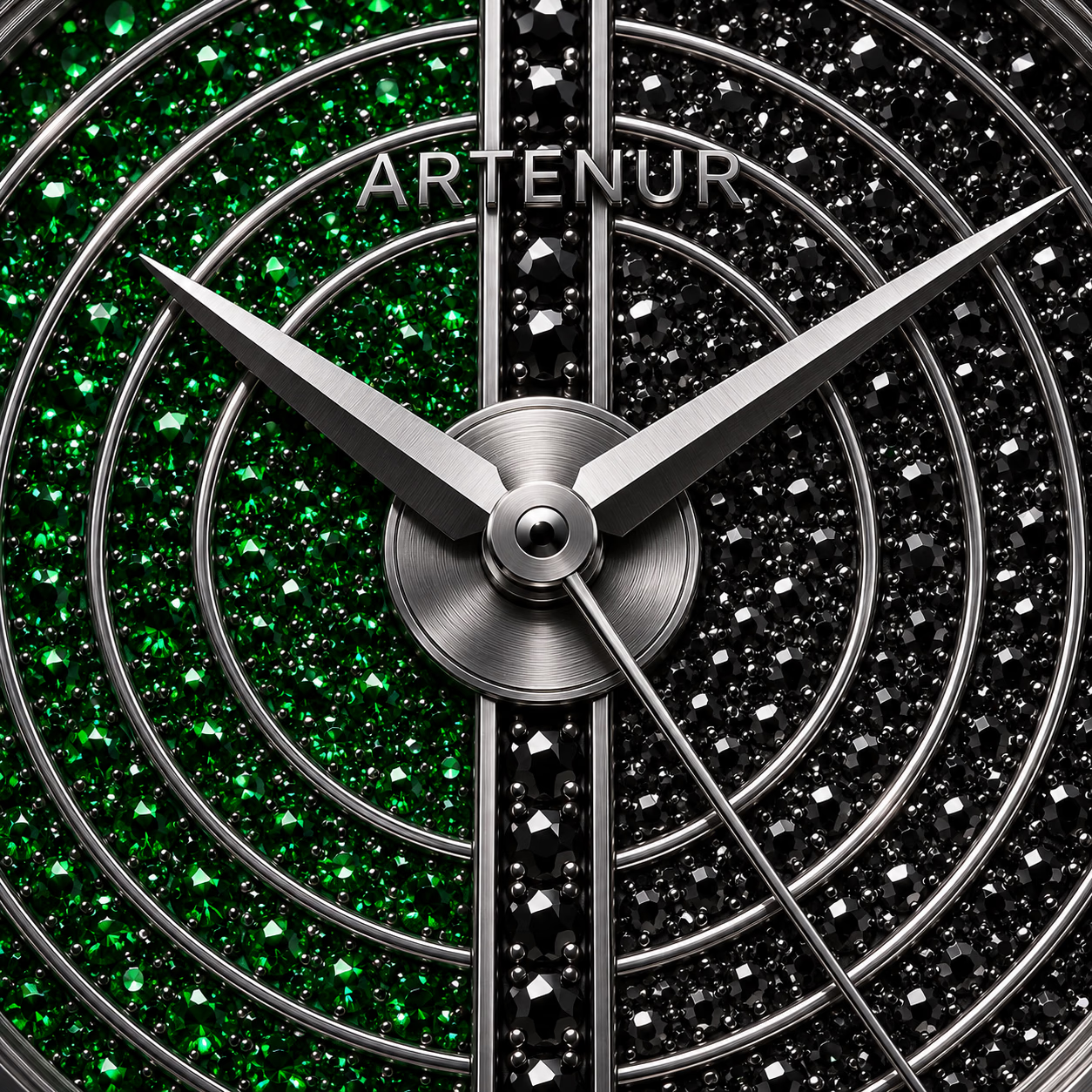
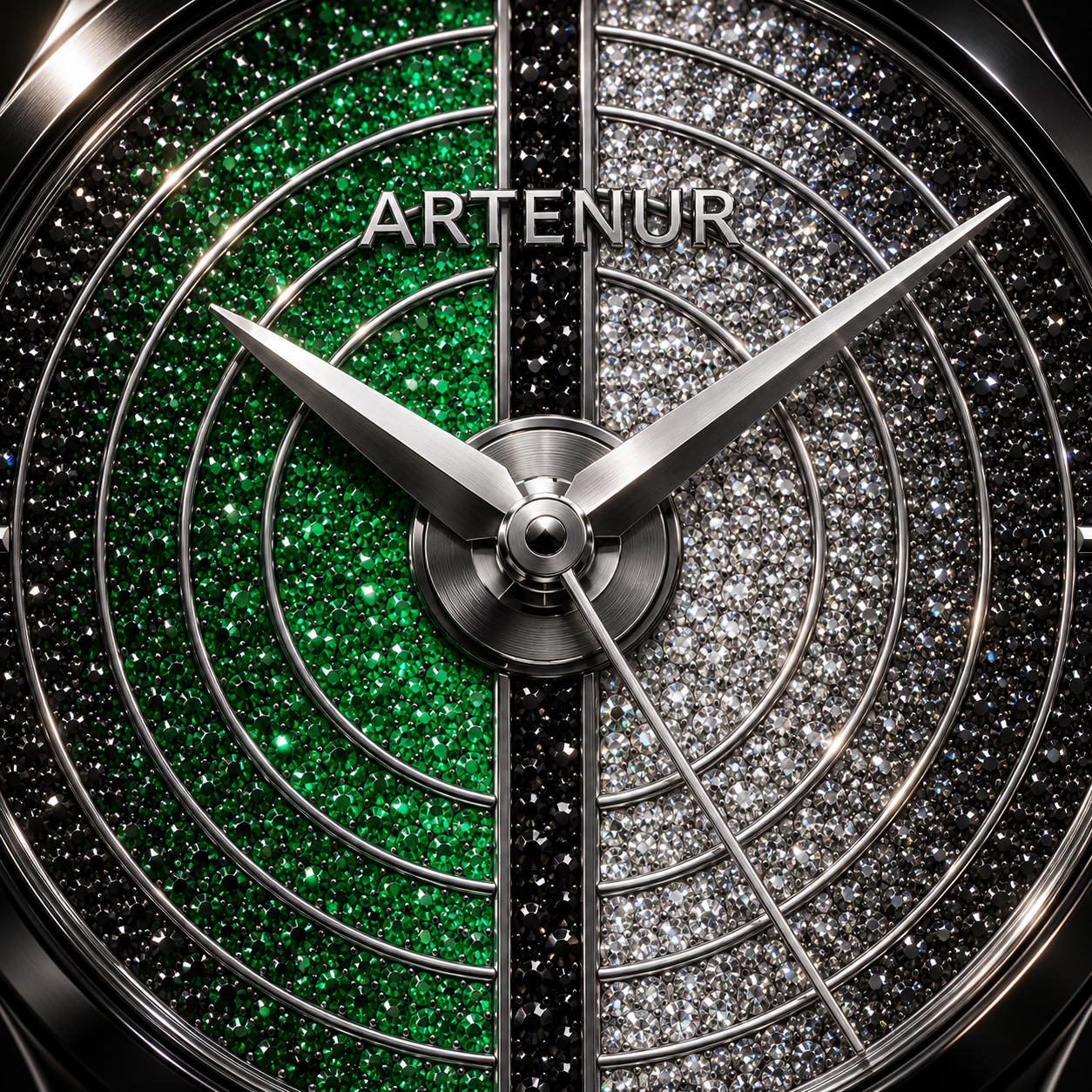

The founding pair
نور
AN-01
Scroll to turn the light
Concept rendering
One architecture. Two fields.
II ٢
The name on the dial is placed exactly halfway between the centre and the edge.
III ٣
A single line of black diamonds divides each dial. It runs through both watches unchanged; the field beside it is what changes.
IV ٤
On one side of both watches. Natural stones are specified throughout.
IV ٤
Zalam, on the other side of the meridian.
IV ٤
Nur. The cut falls on the meridian, the one line the two watches share.
V ٥
In this rendering the rotor carries the dial’s rings to the back of the watch, crossed by a meridian of black diamonds.
The movement in this rendering is drawn for illustration. The prototype movement is a Swiss ETA 2824-2 automatic.
The making
What the founding pair is made of, as it stands today: a development specification, final only when a workshop has proven each part.
VI ٦
The Swiss ETA 2824-2 automatic beats at 28,800 vibrations an hour: eight steps every second, as the ring keeps time here. Every movement on these pages is timed in those beats.
The prototype movement comes from the founder’s own Rado DiaStar automatic, a watch he has owned for some twenty years. It was chosen for a reason that has nothing to do with a catalogue.
An original Egyptian movement is the house’s long-term ambition. It will be described here only when it exists.
A synthesized study of eight beats a second, not a recording of the watch.
VIII ٨
Two watches, presented one at a time. Move across a dial to take the loupe, or enter each piece.Enter each piece to travel across its dial.
Concept rendering
نورNurAN-01EnterConcept rendering
ظلامZalamAZ-02EnterThe house
IX ٩
ARTENUR is an independent watchmaking house in development in Cairo. The standard it is building toward is simple to state and hard to meet: anything visible under a twenty-fold loupe should be worth looking at.
١
Given the choice between a new mechanism finished adequately and a known one finished superbly, the house chooses the second.
٢
Silverwork, stone-setting and leather are meant to be done in Egypt. Where the craft is not ready yet, the house would rather wait and train than send the work abroad.
٣
Output will follow what trained artisans can make well, and no faster. Scarcity is a consequence of the work, never a tactic.